Medical Technology Improvement
Medical Technology Improvement
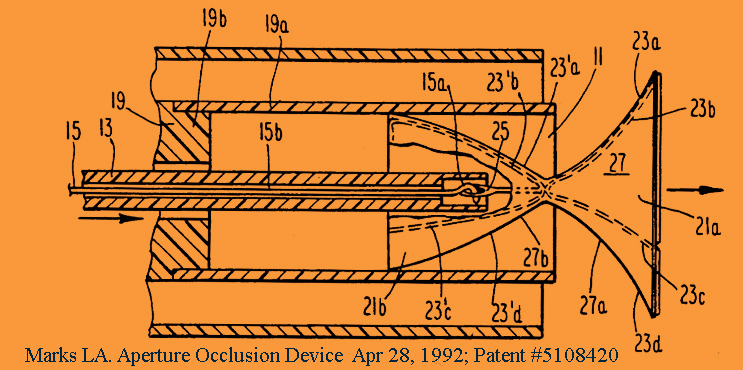
Many inventions fail not because the basic idea is not a good one but how the idea is implemented. For example, some patient monitors have clearly been designed by engineers who think that they know how doctors and nurses will use them but, in fact do not. He has seen many medical devices designed with deep menu structures that will never be accessed by the medical personnel and, as a result, the user can not benefit from the full capabilities of the monitor. Dr. Marks as not only an engineer but a hands-on clinician, is sensitive to these design flaws and can help correct them. In particular, the graphical user interface of medical devices is often not at all intuitive. Dr. Marks’ philosophy is that it should take no more than 5 minutes of training for a user to be able to access the full capabilities of the medical technology. This is reflected in the design of his “Pulse Flowmeter,” a product that is being commercialized by his startup, MGI Medical, LLC. These issues are often referred to as ‘human factor.” Furthermore, sometimes an inventor cannot “see the forest for the trees.” In one exemplary case, Dr. Marks determined that a perfectly good invention could not succeed in its current form but had a high likelihood of succeeding in a different form factor. This sample analysis illustrates Dr. Marks’ approach to human factors analysis. Furthermore, sometimes an invention needs a tweak or two for it to be successful and Dr. Marks, as an “out-of-the-box thinker” can often improve the invention.
Schedule A Free Consultation
Let me know how I can help with your ideas. Get in touch with me to schedule a consultation.